

Pediatric infectious diseases specialist and researcher Dr. Jason Brophy discusses Canada’s first newborn CMV screening program
Somewhere between 1 in every 200 to 800 babies are born infected with cytomegalovirus (CMV). If undiagnosed, it can cause long-term developmental issues and permanent hearing loss.
In 2019, Ontario launched the world’s first newborn screening program for CMV to keep such cases from falling through the cracks. We spoke with Dr. Jason Brophy, co-lead of the CTN+ Ontario Regional team and a pediatric infectious diseases specialist at Children’s Hospital of Eastern Ontario, about his team’s recent evaluation of the program.
What is CMV?

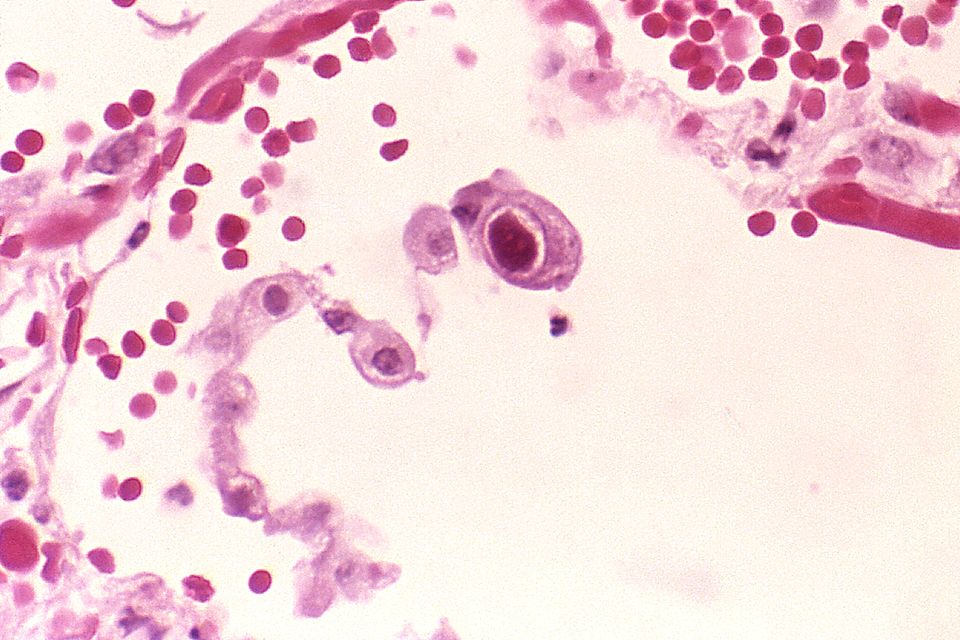
“CMV is the most common virus that no one’s heard of,” said Dr. Brophy. As a type of herpes virus, it’s related to diseases such as chickenpox or varicella, which all “have the ability to be latent infections, meaning you get it for the first time and then it remains dormant but capable of reactivating or waking up when your body is stressed.”
By adulthood, about half of us will have caught CMV. While it doesn’t cause any problems for most of us, in someone with a compromised immune system, like organ transplant patients or people living with HIV, CMV infection or reactivation can wreak major havoc. Dr. Brophy said, “In the olden days we talked about people with HIV going blind— that was related to CMV infection of the eye.”
Today, Canadians living with HIV have access to a variety of medications and treatments that ensure that CMV co-infections are less likely to cause severe damage and can be better managed. There remains, however, another vulnerable group where these infections can do a lot of damage: newborn infants.
Vulnerable Young Immune Systems
CMV is the most common congenital infection (or infection a baby is born with), impacting about 0.4-1.0 per cent of all newborns. Nine out of 10 of those babies show no signs or symptoms. “But the remainder do, and that can range from mild stuff such as a minor rash, or a baby could be a bit small for their age,” said Dr. Brophy. However, if the fetus is infected at the end of the first trimester or beginning of the second trimester when the brain is forming, more serious symptoms can develop. “That can range all the way to severe effects like microcephaly (tiny head), seizures, very low platelet counts, bleeding, and severe liver disease,” he added.
A particularly damaging consequence of CMV infection in babies can be hearing damage. “CMV is the second leading cause of deafness in children,” said Dr. Brophy. “And when a child is born with hearing loss it affects their learning and ability to communicate, leading to developmental delays.”
Through the EPIC 4 study (CTN 281), a team of researchers led by CTN+ scientist Dr. Fatima Kakkar in Montreal, and including Dr. Brophy and other pediatric HIV physicians, have also been conducting pediatric research on children and young adults with perinatally acquired HIV. They found that in a child living with HIV, however well managed, a CMV co-infection can introduce long-term effects, such as continuous low-level inflammation and raised cardiovascular risk. The EPIC4 team recently published a study which reported that Canadian children living with HIV and CMV co-infections had weaker immune systems. Dr. Brophy said, “Now that we know that our kids with HIV, even when it’s under control, are having a higher frequency of CMV reactivation, we need to be paying attention.”
It’s Just a Prick
Researchers knew that early screening of babies would help catch asymptomatic infections. But how best to go about it?
An obvious solution presented itself. When babies are born in hospitals in Canada, a small sample of blood is taken from their heels and blotted onto filter paper. It’s called the Heel Prick Test or Dried Blood Spot Test, and it initially began as a test for phenylketonuria (PKU), a serious condition that causes brain damage in babies that can easily be avoided with a simple change in diet. Since its introduction in the 1960s, the Heel Prick Test has expanded to cover a wide number of metabolic, hormone, and blood disorders. Dr. Brophy said, “So we added an enhanced hearing screen for the dry blood spot that included CMV and the three most common genetic determinants of hearing loss.”
Protecting growing families
After being introduced in 2019, the first analysis of the data from the Ontario screening program was published this past January. Over the initial four years, it screened over 500,000 babies; from that, it identified more than 600 babies with CMV who likely otherwise would have been missed. Instead, they received the care they needed. The program was able to screen 97.4% of all babies born in the province, and 677 of the 689 infants who received initial results were successfully engaged in follow-up assessments. “I think that the key takeaway from our paper is that this was a very feasible practice,” noted Dr. Brophy.
Implementation of this testing into Ontario’s screening program allows asymptomatic children with CMV to be identified early and monitored for hearing loss and developmental delays as they grow. If severe symptoms such as neurologic damage or severe hearing loss are present in the newborn period, doctors can intervene, such as giving anti-virals or providing early hearing support — something particularly important in cases of deafness.
“We can augment their hearing with hearing aids. In cases where there’s complete hearing loss, we can do cochlear implants that will allow them to have normal or near-normal hearing, aiding in language development and learning,” said Dr. Brophy.
Looking ahead
When asked what changes he’d like to see in how Canada handles CMV, Dr. Brophy says he’d like to see improved awareness of the virus. “Many people know that pregnant women shouldn’t change cat litter because of the risk of toxoplasmosis, and you shouldn’t drink alcohol because of the risk of fetal alcohol syndrome, but neither of those are as common as CMV,” he said.
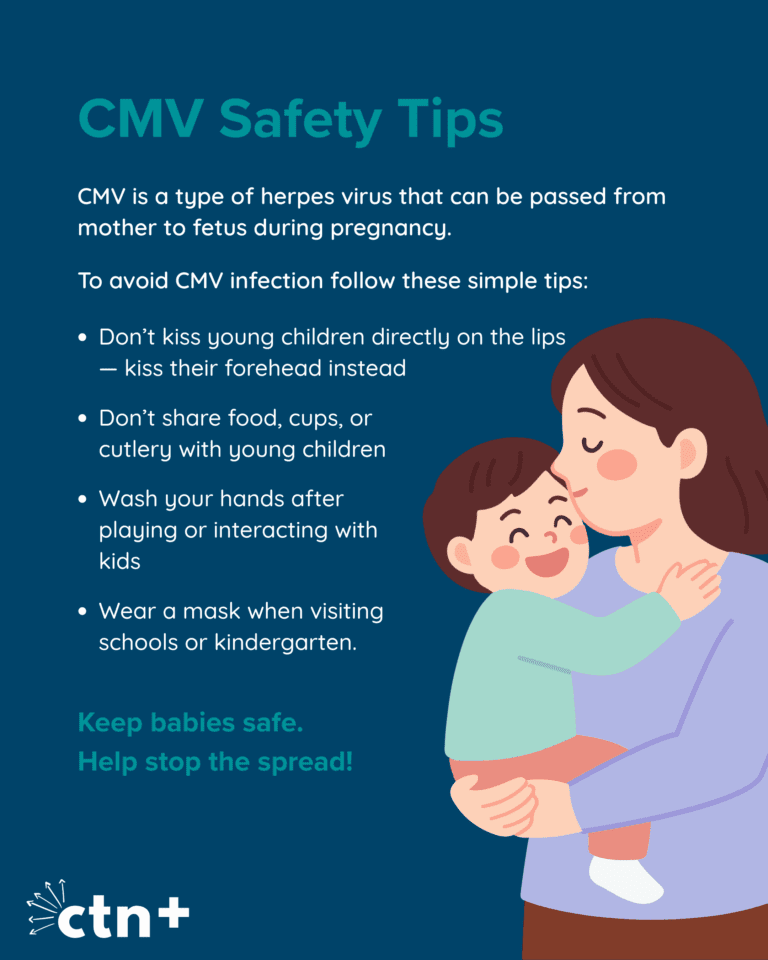
To avoid becoming infected while pregnant, pregnant people should avoid sharing saliva with young children, who often pick up CMV in daycare. This means not sharing cups, utensils or dishware with young children, or kissing them on the lips. “Kiss them on the head instead!” Dr. Brophy suggests.
Even so, CMV infections are a problem which cannot be solved solely through individual action. Fortunately, other places have followed Ontario’s lead, including Saskatchewan in Canada and Minnesota and Connecticut in the US, and Brophy hopes other provinces and health authorities will join the ranks.
Dr. Brophy recognizes that there are still improvements to be made within Ontario’s screening system. “We found way fewer babies with CMV than we expected,” he said, explaining that other studies suggest that CMV prevalence should be four times higher than what they detected. His team is already studying other methods of detecting CMV that might be more accurate, such as using either dry or wet saliva samples.
At six years of age, Ontario’s CMV screening program isn’t much more than a baby itself. There’s always room for improvement, but based on early analysis, this simple and inexpensive screening test is already making a considerable impact on the young lives of children with CMV and their families.